
Date: 14th October 2026
Distinguished representatives of the diplomatic community, development partners, members of the media, civil society organisations, colleagues, and fellow Nigerians,
It is my pleasure to welcome you all to the presentation of the September 2026 edition of the National Human Rights Commission's Monthly Human Rights Situation Dashboard.
This monthly exercise remains an important component of the Commission's commitment to transparency, accountability and evidence-based human rights protection. It provides an opportunity to assess the human rights situation across the country, identify emerging patterns of violations and draw the attention of relevant authorities and stakeholders to issues requiring urgent intervention.
The Dashboard is more than a statistical report. We must always remember that behind every complaint is a person, a family or a community whose rights may have been violated. It is therefore our responsibility to ensure that the information we collect translates into meaningful action, effective remedies and stronger protection for all Nigerians.
Ladies and Gentlemen, for the month of September 2026, the National Human Rights Commission recorded a total of Three Hundred and Thirty-Eight Thousand, Eight Hundred and Ten (338,810) complaints of human rights violations across its offices nationwide. This represents an increase of 40,867 complaints, approximately 14 per cent, compared to the 297,943 complaints recorded in August 2026.
This figure is significant and calls for sustained attention. While an increase in complaints may reflect greater public awareness of human rights and improved access to the Commission's services, it equally underscores the enormous responsibility placed upon the Commission and other duty-bearers to respond effectively to allegations of violations.
Our concern must therefore extend beyond the number of complaints received to the quality of investigations conducted, the remedies secured for victims and the preventive measures put in place to address recurring violations.
The human rights landscape in Nigeria during September 2026 continued to present serious challenges, particularly in relation to the right to life, personal liberty, human dignity, security of persons and the protection of vulnerable populations. Insecurity remained a major concern, with reports of killings, kidnappings and attacks on communities in different parts of the country. Of particular concern were the continuing reports of mass abductions in Niger State, where families and communities expressed anguish over the prolonged captivity of their loved ones. The Commission reiterates that the protection of life and property is a fundamental obligation of the State. We therefore call on relevant security agencies to intensify efforts towards securing affected communities, rescuing abducted persons and ensuring that perpetrators of these crimes are brought to justice.
September also witnessed deeply disturbing reports concerning the deaths of 37 persons in custody following operations against artisanal mining activities in Niger State. The circumstances surrounding these deaths raise grave concerns about the right to life, the prohibition of torture and other cruel, inhuman or degrading treatment, and the obligation of law enforcement institutions to safeguard the dignity and welfare of persons in their custody. While we acknowledge the Federal Government's decision to initiate an investigation into the incident, the Commission emphasises the need for a thorough, independent and transparent process that establishes the facts, ensures accountability where wrongdoing is established and provides appropriate remedies to affected families. Let me reiterate that the deprivation of liberty must never amount to the violation of human dignity. Every person in custody remains entitled to the full protection of the law, including the rights to life and dignity of human person.
The Commission also remains concerned about the persistent vulnerability of women and children to sexual and gender-based violence, exploitation, abuse and other forms of discrimination. These violations demand stronger preventive mechanisms, survivor-centred responses, effective investigations and improved access to justice. In this regard, we welcome the national stakeholders' engagement held in September on the review of the Child Rights Act, 2003. This presents an important opportunity to strengthen Nigeria's child protection framework and address gaps in the prevention of violence, exploitation and abuse against children. We urge relevant authorities to ensure that these reform efforts translate into stronger institutions, adequate resources and practical protection for children, particularly those in vulnerable and underserved communities.
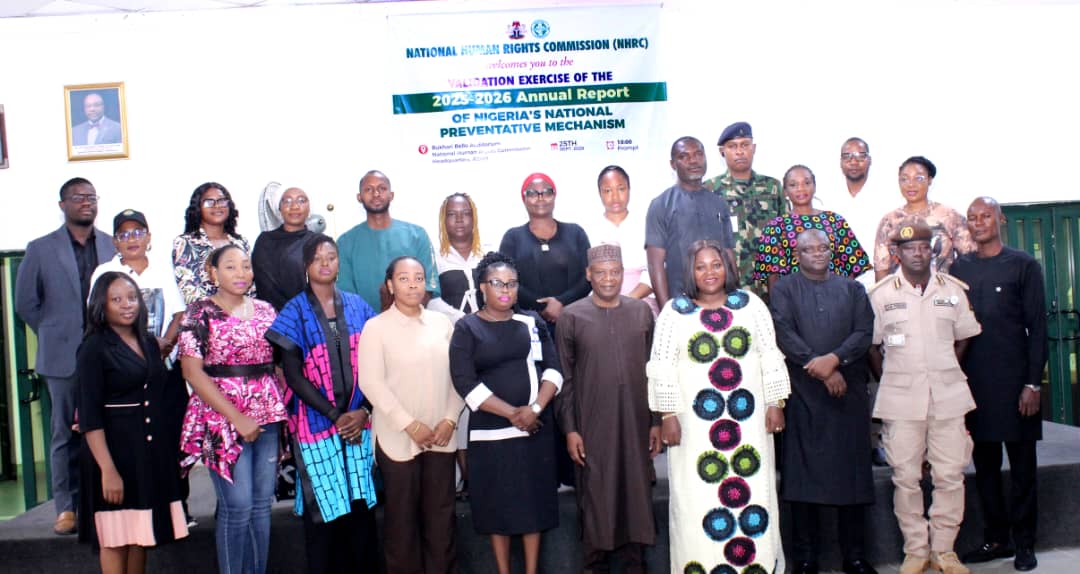
Notwithstanding these challenges, September also recorded important institutional efforts towards strengthening human rights protection and accountability. On 25 September 2026, the Commission, through its National Preventive Mechanism, undertook the validation of its 2025–2026 Annual Report, bringing together relevant stakeholders to review findings and recommendations relating to the prevention of torture and other forms of ill treatment in places of detention. This initiative reinforces the importance of independent monitoring of custodial facilities and the need to address systemic conditions that expose detainees to abuse.
Similarly, as Nigeria commemorated the International Day of Democracy on 15 September, the Commission reiterated the importance of safeguarding democratic freedoms, promoting political tolerance and ensuring respect for human rights as the country prepares for the 2027 General Elections. Democracy must be sustained not only through periodic elections but also through the protection of freedom of expression, association, peaceful assembly and meaningful public participation.
It is in this context that I wish to highlight another important initiative recently undertaken by the Commission. Just yesterday, the Commission, in collaboration with the Nigeria Network of NGOs, with support from the Heinrich Böll Stiftung Nigeria and the Office of the United Nations High Commissioner for Human Rights, organised a Train-the-Trainer Workshop for NHRC State Coordinators on Operationalising the NHRC Advisory Opinion on Promoting and Protecting Civic Space and Human Rights. The workshop was designed to strengthen the capacity of State Coordinators to disseminate and apply the Commission's Advisory Opinion issued on 18 May 2026, while improving the monitoring, documentation and reporting of civic space-related violations across the Federation.
Importantly, the initiative seeks to strengthen the integration of civic space monitoring into the Commission's existing Human Rights Observatory and Dashboard reporting mechanisms. This will enhance our ability to identify emerging restrictions on civic freedoms, document incidents involving peaceful assemblies, monitor regulatory practices affecting civil society organisations and support timely institutional interventions.
We believe that strengthening the capacity of our State Offices in this regard will contribute significantly to the protection of civic space, improved engagement between civil society and public institutions, and greater accountability in the exercise of governmental authority.
Distinguished Ladies and Gentlemen, the findings presented through our monthly Dashboard continue to demonstrate that human rights protection requires a collective and sustained effort. We therefore call on government institutions at all levels, law enforcement and security agencies, civil society organisations, development partners and other stakeholders to strengthen collaboration towards addressing the underlying causes of human rights violations.
The Commission remains committed to improving its monitoring and reporting mechanisms, strengthening investigations and complaints resolution, and ensuring that its findings inform policies and institutional reforms. Our objective is not merely to document violations after they occur, but to contribute to a system where violations are prevented, victims obtain justice and public institutions are held accountable.
As we present the September 2026 Dashboard, I urge all stakeholders to reflect carefully on the findings and recommendations and take concrete steps towards addressing the challenges identified.
I wish to appreciate the dedication of our State Coordinators and staff across the nation, whose efforts in receiving complaints, documenting incidents, conducting investigations and engaging relevant institutions continue to sustain this important exercise. I also acknowledge the contributions of our development partners, civil society organisations, members of the media and other stakeholders who continue to support the Commission's mandate.
Ladies and Gentlemen, let me conclude by emphasising that the true measure of our progress is not simply the number of complaints documented, but the extent to which our collective efforts improve the lives of Nigerians. It is my hope that the findings of this Dashboard will continue to inspire meaningful action towards building a more just, inclusive and rights-respecting Nigeria.
Thank you and God bless the Federal Republic of Nigeria.
Dr. Tony Ojukwu OFR, SAN, FICMC
Executive Secretary/CEO
National Human Rights Commission
Download the Executive Secretary's speech here:
Access the full dashboard here: